重要な手紙を燃やしてしまいました…! I accidentally burned an important letter…!
ええ!そんなことありますか? What?! How does that even happen?
ええ、重大なミスです。ウサギ先生一生の不覚。大切で大事な手紙だったんですよ。Yeah, a huge mistake. A lifelong blunder for Rabbit-Sensei. It was such an important, precious letter.
…先生、「重要」「重大」「大切」「大事」を使いたいだけで、燃やしたのはウソですね?…Sensei, you just wanted to use words like “juuyou,” “juudai,” “taisetsu,” and “daiji,” didn’t you? You didn’t really burn it, did you?
おお、トラウマウサギくん、分かってきましたね。Ah, Rabbit-Trauma, you’re catching on.
そりゃそうですよ、現代社会でどうやったら大事な手紙が燃えるんですか。Of course. How would anyone burn an important letter in modern society?
たしかに、燃えたんじゃないんです。紙タバコと間違えてワクチン接種券に火をつけてしまって、焦げただけです。True, it didn’t actually burn. I just mistook it for a paper cigarette and lit my vaccination card on fire—it only got a little scorched.
……!?そんなことあります!? What!? How does that even happen!?
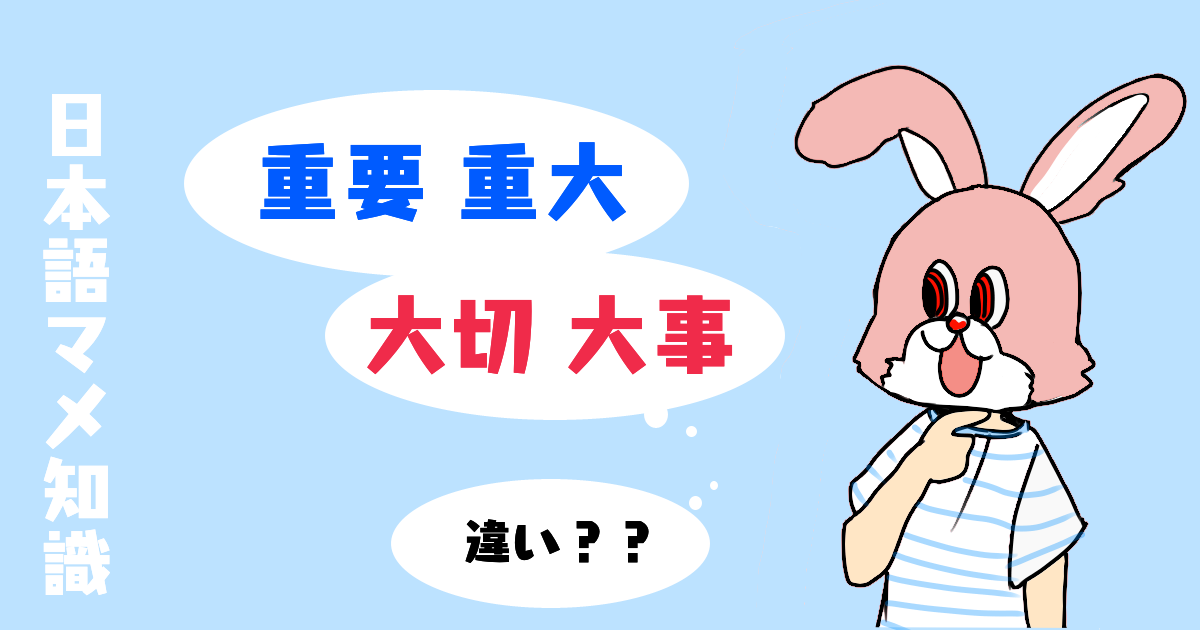
大事と大切、重要と重大の違いとは何でしょうか?考えたことがありますか?それぞれ言い換えやすい類語表現ではありますが、実は違いもあります。ここでは、それぞれの意味や使い分けを例文や英語などから見ていきましょう。
What’s the difference between “important” and “precious,” or between “serious” and “significant”? Have you ever thought about it? They can often be used interchangeably, but they do have nuances. Let’s look at their meanings and usage through examples and English equivalents.
大切と大事の違いとは?意味と英語言い換え
まず、「大切」とは、「大事」とは、どのような意味があるのでしょうか。それぞれの類義語と英語、例文から大切と大事の違いを見ていきましょう。First, what do taisetsu (大切) and daiji (大事) mean? Let’s look at their nuances, synonyms, English equivalents, and examples.
大切とは?言い換え・英語・例文
- 心から必要として慎重に扱うさま。To treat something with care because it’s truly needed or deeply cherished
- 愛して尊重すること。To treat with love and respect it.
- 類義語:大事、重要、値打ちがある、愛顧など
- 英語:important, valuable, precious
「大切にしていたおもちゃをなくして、子どもは大泣きした。」The child cried hard after losing the toy they cherished.
「祖母の遺した大切なクシなんです。」This is an important comb left by my grandmother.
「君に出会えて大切なことに気がついた。」Meeting you made me realize what truly matters.
「僕と君の大切な話。」A precious conversation between you and me.
「何でもない日々が何より大切だ。」Ordinary days are the most precious of all.
大事とは?言い換え・英語・例文
- 重要なこと、重大なものとして丁寧に扱うこと。To handle something carefully because it is important or serious.
- 類義語:大切、重要、決定的など
- 英語:important, serious, significant, critical
「大事なものは備え付けの金庫に入れておいてください。」Please keep important items in the safe provided.
「大事な会議で寝坊した!」I overslept on the day of an important meeting!
「大事に育てた朝顔が花を咲かせた。」The morning glory I carefully raised has finally bloomed.
「大事なことなので2度言います。」I’ll say this twice because it’s important.
大切と大事の違いと使い分け
大切と大事の違いは、個人的な愛情や思い入れなど、気持ちが含まれるかどうか。「大切」は、気持ちが大いに含まれます。一方、「大事」には、気持ちが入っているかどうかは関係ありません。The key difference lies in whether emotion or personal attachment is involved. Taisetsu carries emotional weight—love, affection, or personal significance—while daiji does not necessarily include feelings; it simply means something important or serious.
①「大切な手紙」というと、友人や親族、恋人からの手紙を連想します。②「大事な手紙」だと、仕事や手続きに関する手紙である可能性が高いですね。① suggests a letter from a friend, relative, or loved one. ② likely refers to a letter about work or official matters.
ワクチン接種券の手紙は「大事」ですが、「大切」ではないということですか?So, a vaccination notice is daiji (important), but not taisetsu (precious)?
そうとも言えます。けれど、海外で働きたい!という気持ちがある人にとっては、「大切」でもあります。You could say that. But for someone eager to work abroad, it might also be taisetsu.
この例は、どうでしょうか。結果は数値や成果のみの感情が含まれない「大事なこと」で、過程は、その人の頑張りや工夫など本人や評価者の感情が含まれた「大切なこと」という意味です。“What’s important is the result; what’s precious is the process.” Here, “result” refers to something objective and measurable—daiji na koto—while “process” involves feelings, effort, and creativity—taisetsu na koto.
しかし、仕事の結果や手続きのことであっても、important なものを気持ちと切り離すことは不可能です。そのため、「大切」と「大事」は気持ちの有無を意識せずに使われます。つまり、現在の日本語で明確に使い分けている人はほぼいません。Still, in reality, it’s hard to separate importance from emotion, even in work or procedures. That’s why modern Japanese speakers rarely distinguish between taisetsu and daiji clearly.
「もらった手紙、大切にするよ。」「もらった手紙、大事にするよ。」
「大切なお知らせがあります。」「大事なお知らせがあります。」
「子犬を大切に育てる。」「子犬を大事に育てる。」
「あなたを大切に思う。」「あなたを大事に思う。」
以上のような例では、使い分けがされることなく、ほとんど同じ意味としてとらえられます。ただし、以下のような使い方では使い分けられます。However, there are expressions where only daiji works.
「もう熱も下がったが、大切をとって仕事を休んだ。」→×
「大事をとる」とは、万が一に備えて、慎重に用心するという意味。リスクを避けるために慎重な選択をする状況で使われます。The phrase daiji o toru means “to act cautiously” or “to play it safe” to avoid risk—a meaning unique to daiji.
重要と重大の違いは?意味と英語言い換え
それでは、「大事」や「大切」の言い換え表現とされる「重要」と「重大」の違いは、どんなところにあるのでしょうか。「重要」と「重大」の意味や類語(類義語)、英語、例文から確認しましょう。
Although both can be translated as important or serious, their nuances differ. Jūyō refers to something essential in nature or meaning—something of great value or necessity. Jūdai refers to something that brings about serious consequences or major impact.
重要とは?言い換え・英語・例文
- 物事の本質にかかわること。Something deeply connected to the essence of a matter.
- きわめて大切であること。Extremely important or essential.
- 類義語:重大、大切、大事、意義深い、意味のある、必須、決定的、肝心など
- 英語:important, crucial, critical, significant
「この言葉は重要です。覚えておきましょう。」This word is important—remember it.
「彼は国の重要人物だ。」He’s an important figure in the country.
「国家の重要機密を取り扱う。」Handling top-secret national information.
「重要な会議で司会を任されて、緊張している。」I’m nervous because I was asked to host an important meeting.
「キリスタン文書は日本語の歴史において重要な資料だ。」The Kirishitan documents are an important source in the history of the Japanese language.
重大とは?言い換え・英語・例文
- 大変な結果や影響をもたらすこと。Something that produces serious results or has great influence.
- 大きな影響を与えるさま。A situation with heavy responsibility or consequences.
- 類義語:重要、深刻、大事、大変など
- 英語:important, serious, significant, noteworthy
「式の司会だなんて、責任重大だ。」Being the ceremony’s host is a huge responsibility.
「今になって事の重大さに気付いたか。」Have you only now realized the seriousness of the situation?
「重大な任務を背負う。」Carrying out a critical mission.
「今、この会議の重大な局面に来ている。」We’ve reached a crucial stage in this meeting.
「コロナの蔓延は重大な問題となった。」The spread of COVID became a major problem.
重要と重大の違いと使い分け
「重要」と「重大」の違いとは、その影響や結果にネガティブな要素が入るかどうか。The key distinction lies in whether there’s a negative or serious consequence implied.
①「重要な任務だ。失敗のないようにせねば。」It’s an important mission. I must make sure not to fail.
②「重大な任務を負った。失敗できない。」I’ve been given a grave mission. I can’t afford to fail.
「重要」という言葉自体には「悪い結果」や「悪い影響」の意味はありません。したがって、①「重要な任務」をプレッシャーに感じているかどうかの書き手の気持ちは分かりません。一方、「重大」には言葉自体に「悪い結果」「悪い影響」というネガティブな印象も垣間見えます。②「重大な任務」を書き手がプレッシャーに感じているような印象がありますね。The word jūyō simply means “important” or “essential” and carries no emotional or negative nuance. In sentence ①, we can’t tell if the speaker feels pressure. In contrast, jūdai often implies weight, seriousness, or possible negative outcomes—sentence ② gives the impression of pressure or gravity.
「重要・重大」と「大切・大事」の違いとは?
「重要・重大」の違い、「大切・大事」の違いを、それぞれ見てきました。さて、それでは「重要・重大」「大切・大事」4つの違いは、どんなところにあるのでしょうか。まずは、以下の例文を見てください。What`s the difference between “Jūyō / Jūdai” and “Taisetsu / Daiji”? Let’s compare the four:
②「これは、大事な問題です。」
③「これは、重要な問題です。」
④「これは、重大な問題です。」
「大切・大事」は、それらを丁寧に扱う様子。「重要・重大」は、物事の核心や欠かせない要素。つまり、大事・大切と重要・重大の違いは問題そのものか、それらを扱う様子かというところにあります。Taisetsu and daiji describe how something is treated or valued —with care or respect. Jūyō and jūdai describe the nature or essence of the issue—its importance or seriousness.
①「大切な問題」は、問題を慎重に扱い、解決しようという発言者の気持ちが現れた言い方です。②「大事な問題」は、発言者個人の気持ちはなくとも、丁寧に扱い解決すべき問題だと考えられるでしょう。③「重要な問題」は、本質を問うような、今後を左右するような問題のことでしょう。④「重大な問題」は、大きなマイナスの影響を与える問題であり、発言者が問題に対してネガティブな感情を持っていることが伺えます。① “Taisetsu na mondai” suggests the speaker’s personal feeling or determination to handle it carefully. ② “Daiji na mondai” focuses more objectively on the need to deal with it properly, without necessarily showing emotion. ③ “Jūyō na mondai” points to a core or decisive issue that affects outcomes. ④ “Jūdai na mondai” implies a problem with serious, often negative, consequences—and the speaker’s sense of concern or tension.
…とはいえ、大事、大切と重要、重大について、多くの人は意味の違いを意識して使い分けてはいないでしょう。That said, most Japanese speakers today don’t consciously distinguish between these words in everyday use.
まとめ
- 「重要」とは、物事の本質となるもの。
- 「重大」とは、大きな影響を与える物事。物事にネガティブな印象を受ける。
- 「大切」とは、個人的な強い気持ちを持って丁寧に扱うさま。
- 「大事」とは、個人的気持ちはなくとも丁寧に扱うさま。
前回記事:【になる】【となる】の違いとは?


コメント