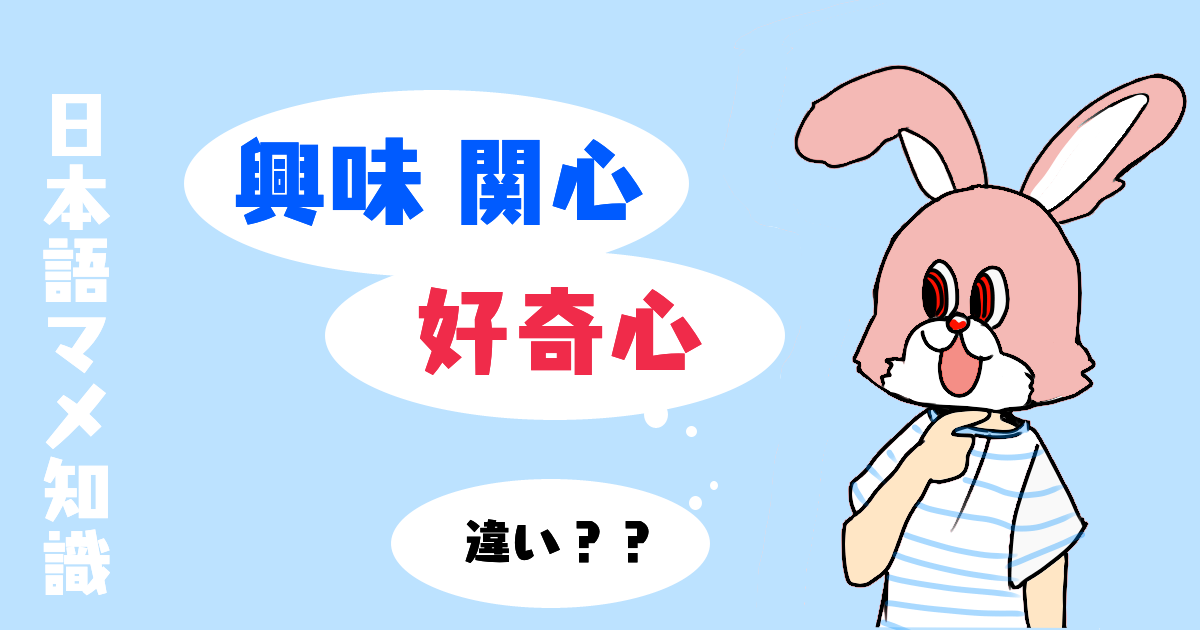

…というわけで、日本語というのは他国から見た文献が少なくて…。So, as I was saying, there aren’t many studies on Japanese from other countries’ perspectives…

へー。Really?
もっと関心を持ってくださいよ。Come on, show a bit more interest!
そういわれても…。Even if you say that…
ふむ…では、好奇心を刺激しましょうか。「興味」「関心」「好奇心」には、な、なんと、違いがあるんですよ! Hmm… then let me spark your curiosity. Believe it or not, there’s actually a difference between “interest,” “concern,” and “curiosity”!
へー。Really?
もっと興味持ってくださいよ…!Please, be a little more interested…!
Do you know the difference between interest and concern, or between curiosity and interest? In everyday conversation and business, we often use these words interchangeably, but they each have subtle differences. Here, we’ll clearly explain the meanings, synonyms, and English equivalents of interest, concern, and curiosity, along with example sentences. We’ll also touch on how interest and concern are used in management terminology.
「興味・関心・好奇心」の意味・類語・英語
「興味」「関心」「好奇心」には、それぞれどんな意味があるのでしょうか。まずは、3つの言葉の意味と類語や言い換え表現、英語を見ていきましょう。Let’s first look at the meanings, synonyms, alternative expressions, and English equivalents of these three words.
「興味」とは?英語・類語言い換え
- おもしろいと思って心がひかれること。Feeling attracted to something because you find it interesting.
- 初期段階の感情。An initial stage of emotional engagement.
- 類語言い換え:関心、好奇心、食指
- 英語:interest
「趣味といえるほどではないですが、絵画に興味があります。」I’m not sure I’d call it a hobby, but I’m interested in painting.
「インドの歴史に興味があります。」I’m interested in the history of India.
「興味のあることはとことん調べるようにしています。」When something catches my interest, I like to research it thoroughly.
「興味を引く記事を見つけた。」I found an article that caught my interest.
「学ぶたびに、興味が高まる。」The more I learn, the more my interest grows.
興味とは、何かに対して面白いと感じ、心が引きつけられる状態を指します。一般的に、何か新しいことに出会った際に感じる最初の感情です。“Kyoumi” refers to the feeling of being drawn to something because it seems fun or appealing.
広い意味で使用され、特定の分野に対して引きつけられる初期段階の感情と言えます。It’s generally the first emotional response when encountering something new. In a broad sense, it represents an early-stage attraction toward a particular topic or field.
「関心」とは?英語・類語言い換え
- ある物事に心をひかれ、特に注意を払うこと。Paying special attention to something because you’re strongly drawn to it.
- 「興味」より踏み込んだ強い気持ち。A deeper feeling than simple “kyoumi”.
- 類語言い換え:興味、好奇心、配慮、心配
- 英語:interest, concern
「関心を抱いたのは、彼だけではなかった。」He wasn’t the only one who showed concern.
「どうもあなたに関心があるようですね。」It seems you have a certain interest in him.
「何事にも無関心なのは良くない。」It’s not good to be indifferent to everything.
「あなたのレポートに関心を示した人は多かったですよ。」Many people showed interest in your report.
関心は、興味よりも一歩進んだ感情です。特定の物事に対して、より深く知りたい、注意を払いたいという強い思いを指します。具体的な行動を伴うことも多く、単なる興味から次のステップへ進んだより積極的な気持ちを表します。“Kanshin” (関心) represents a step beyond “interest.” It reflects a stronger desire to understand or pay attention to something specific, often leading to concrete actions. It’s a more proactive and involved feeling compared to the initial curiosity of interest.
「関心」は「彼の行動にはいつも感心する」の「感心」とは違います。This 関心 (concern/interest) is different from 感心 (admiration), as in “I’m impressed by his behavior.
「好奇心」とは?英語・類語言い換え
- 知らないことや珍しいことへの興味・関心。Interest or concern toward something unknown or unusual.
- まだ知らないことに対して知りたいという強い欲求。A strong desire to learn about what you don’t yet know.
- 類語言い換え:興味、関心、出来心
- 英語:curiosity, inquisitiveness
「好奇心に勝てなかった。」I couldn’t resist my curiosity.
「好奇心からパンドラの箱を開けてしまった。」Out of curiosity, I opened Pandora’s box.
「彼は昔から好奇心が強い子だった。」He’s always been a very curious child.
「単なる好奇心から始めた勉強だったが、思いの外楽しかった。」I started studying just out of curiosity, but it turned out to be surprisingly fun.
好奇心とは、未知のことや珍しいことに対して強い興味や関心を持つことです。新しい知識や体験に対して心が引きつけられる状態であり、探究心が強い場合に使われます。“Koukishin” refers to a strong attraction to the unknown or the unfamiliar. It describes the desire to seek new knowledge or experiences and is often associated with an explorative mindset.
上の例のように、「好奇心」は、ネガティブな文章で用いられることもあります。As seen in the examples, curiosity can sometimes appear in negative or cautionary contexts as well.
「興味・関心・好奇心」の違いとは
「興味」「関心」「好奇心」の違いはどんなところにあるのでしょうか。それぞれの例文、派生語から違いを見ていきましょう。
興味と関心と好奇心の違い:例文
前述した通り、興味とは広い意味で何か面白いと感じ、心が引かれる状態。関心とは、興味からさらに一歩進み、注意を払う強い感情。好奇心とは、知らないことや珍しいものに対して強い関心を持つ状態です。次の例文の違いはどのようなところにあるでしょうか。As mentioned earlier, interest refers broadly to the feeling of being drawn to something because you find it appealing or enjoyable. Concern (or deep interest) goes a step further, expressing a stronger emotion of attention or involvement. Curiosity describes a strong desire to learn about something unknown or unusual. Let’s look at the differences through the following examples:
「日本語に興味を持つ。」
「日本語に関心を持つ。」
「日本語に好奇心を持つ。」
「日本語に興味を持つ」というのは、どんな言葉か知りたい、やってみたいという状態で日本語に対して面白いと思い始めた状態です。一方、「日本語に関心を持つ」は、日本語の文法や歴史を学びたいと具体的な行動をしていること。「日本語に好奇心を持つ」は、日本語について何も知らないが、知りたいと思う気持ちを表します。“日本語に興味を持つ。Be interested in Japanese” means you find the language appealing and want to know or try it — it’s the starting stage of interest. “日本語に関心を持つ。Have concern (deep interest) in Japanese” suggests you’re taking specific actions, such as studying its grammar or history. “日本語に好奇心を持つ。Have curiosity about Japanese” implies you don’t yet know much about it but have a strong desire to learn.
興味と関心の違いは、気持ちの強さと具体的行動。しかし、似た言葉なので「興味関心」のようにひとつの単語にされています。In short, the difference between interest and concern lies in the strength of feeling and the presence of action. However, because the two are closely related, they’re often combined as a single phrase like “interest and concern.”
「興味・関心・好奇心」の類語・派生語・言い換え
「興味」「関心」「好奇心」には、多くの類語(類義語・同義語)や言い換え表現、派生語があります。それぞれ、例文付きで見ていきましょう。
There are many related or synonymous expressions derived from these three words. Let’s look at some of them with examples.
興味関心:興味・関心・好奇心の言い換え
「興味関心」とは、「興味」と「関心」が一緒になった言葉。ある物事に対して「面白そう」「知りたい」と感じて、注意を向ける心のことです。A combined term meaning the mental state of feeling “this seems interesting” or “I want to know more” and directing attention toward something.
心(を)惹かれる:興味・関心・好奇心の言い換え
「心を惹かれる」「心が惹かれる」「心惹かれる」とは、感覚的に強い魅力を感じて心を引かれることです。好意や関心が向いており、自分の意思と関係なく好きになってしまうニュアンスを含みます。This phrase expresses being deeply and emotionally attracted to something, often involuntarily. It conveys a sense of fascination or affection that pulls the heart toward someone or something.
「DANDAN心惹かれてく、そのまぶしい笑顔に」My heart is gradually drawn to your dazzling smile.(『ドラゴンボールGT』主題歌より)
探求心:興味・関心・好奇心の言い換え
「探求心」とは、物事を深く知ろうとする強い意志のことです。Refers to a strong will or determination to seek deeper understanding or knowledge about something.
「興味」の派生語
「興味」の派生語は非常に多く存在します。よく使うものは以下の通りです。
「…以上が、御社に興味を持ったきっかけです。」That’s what first made me interested in your company.
「日本語の漢字に興味を抱いた。」I became interested in Japanese kanji.
「君と付き合ったのは、ただの興味本位だった。」I dated you just out of curiosity.
「その話に弟は興味津々です。」My younger brother is completely fascinated by that story.
「その話題はとても興味深い。」That topic is really fascinating.
「きみの話を聞いて、その映画に興味が湧いたよ。」After hearing your story, I became interested in that movie.
ちなみに、「興味が湧く」は自然に内側から関心が生まれる状態。「興味が沸く」は外部からの情報によって急激に関心が生じる状態を言います。「興味が湧く」(welling up naturally from within) and 「興味が沸く」(arising suddenly from external influence) are sometimes distinguished.
興味心という言葉を使う人がいますが、今のところ辞書にはありません。興味の心という意味で使っているんでしょうね。“興味心” is occasionally used in speech, but it isn’t a recognized dictionary word — it likely means “a heart full of interest.”
「関心」の派生語
「関心」は、「興味」と同じく、「持つ」「寄せる」などの動詞を伴いよく使われます。派生語は非常に多く存在します。よく使うものは以下の通りです。
「言語の違いに関心を持つ。」I’m interested in the differences between languages.
「漢字の成り立ちに関心を覚える。」I became interested in the origins of kanji.
「今の関心事といえば、娘の結婚についてですね。」My main concern right now is my daughter’s upcoming marriage.
「好奇心」の派生語
「好奇心」は、好奇心が強い状態である意味の言葉がいくつかあります。
「子どもは好奇心旺盛なものだ。」Children are naturally full of curiosity.
「未知の言語に触れ、知的好奇心が刺激された。」Encountering an unknown language stimulated my intellectual curiosity.
マーケティング用語「興味と関心」の違いとは
マーケティング用語としても、「興味」「関心」は消費者の購買行動における重要なステップです。マーケティング用語では、興味・関心(Interest)という言葉が使われます。これは、消費者の購買行動モデルにおけるプロセスを言います。広告や商品を通じて消費者が認知し、そこから「興味・関心」が生まれることで、購買意欲や検索行動に繋がります。
関心:具体的に商品やサービスを調べ、購買を考える段階。
例えば、消費者が広告やCMを見て、ある商品の存在を「認知」し、その後、商品が自分の「興味・関心」の対象となるプロセスです。この「興味・関心」の後、手に入れたいという「欲求」や商品について調べる「検索」に繋がります。
「 」内はマーケティング用語です
参考:AIDMA・AISAS・SIPS|マーケティングにおける購買行動モデル
まとめ
- 好奇心と興味、関心の意味
「興味」は、広い意味で心ひかれること。
「関心」は、さらに踏み込んで行動すること。
「好奇心」は、知らないことや珍しいことに心ひかれること。 - 興味と関心の違い、興味と好奇心の違い
「興味」は広い意味。
「関心」は一歩踏み込んだ気持ち。
「好奇心」は知らないことや珍しいことに使う。 - マーケティング用語の興味と関心の違い
興味:商品に対して面白そうだと感じる段階。
関心:具体的に商品やサービスを調べ、購買を考える段階。
これらの言葉の微妙な違いを理解することで、より効果的なコミュニケーションが可能になります。また、マーケティングにおいても、消費者の興味・関心を引きつけることが購買行動に繋がるため、非常に重要です。興味・関心・好奇心の違いを把握し、日常生活やビジネスに役立ててみましょう!
次回記事:「見る」と「見える」の違いとは?「見られる」「見せる」との区別
コメント
そうなんだ