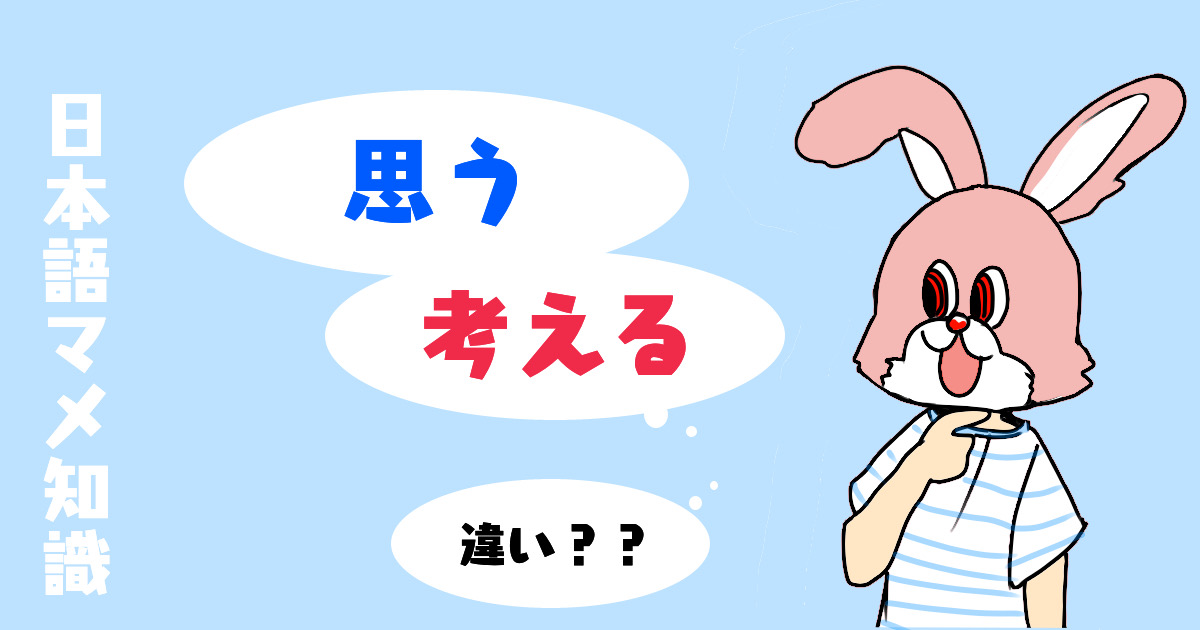

『われ思う、故にわれあり。』『人間は考える葦(あし)である。』”I think, therefore I am.” “Man is a thinking reed.”

お!先生、哲学者きどりですか? Oh? Are you playing the philosopher, sensei?
いえ、デカルトとパスカルの格言、英語だとどちらも「think」が使われているのですが、日本語だと「思う」「考える」と訳されているので何でかなあと思いまして。No, they’re famous sayings by Descartes and Pascal. In English they both use “think,” but in Japanese one is translated as “omou” and the other as “kangaeru,” so I was wondering why.
(まためんどくさいこと考えてるなあ…。)There you go overthinking again…
「思う」と「考える」の違いと使い分けをご存じでしょうか。ここでは、2つの言葉の共通点と違い、使い分けを英語・例文付きで簡単にわかりやすく解説します。類語「感じる」「想う」との意味の違いもご紹介。Do you know the difference between “omou” and “kangaeru,” and how to use them properly? Here, we’ll clearly and simply explain their similarities, differences, and usage with English explanations and example sentences, and also compare them with related words like “kanjiru” and “omou” (in the sense of longing).
また、レポートや面接、論文やビジネス敬語で適切な「思う」や「考える」の言い換え表現もお伝えします。We’ll also introduce appropriate paraphrases for “omou” and “kangaeru” suitable for reports, interviews, academic papers, and polite business language.
「思う」と「考える」の意味・例文・言い換え表現
「思う」と「考える」の違いについて考察する際、日常会話や哲学的な文脈でしばしば話題に上ります。例えば、デカルトの名言「われ思う、故にわれあり」やパスカルの「人間は考える葦である」では、英語ではどちらも「think」と訳されますが、日本語ではそれぞれ「思う」と「考える」として訳されています。なぜこれらの言葉が違うのかを理解することは、レポートや論文作成、ビジネス敬語においても重要です。When considering the difference between “omou” and “kangaeru,” the topic often comes up in everyday conversation and philosophical contexts. For example, Descartes’s famous line “I think, therefore I am” and Pascal’s “Man is a thinking reed” are both rendered as “think” in English, yet in Japanese they are translated using different words, “omou” and “kangaeru.” Understanding why these words differ is important not only philosophically but also for writing reports and academic papers and for using appropriate business language.
「思う」の意味・英語・言い換え
- 感情的・一時的に何かを思い起こすこと。“Omou” generally refers to recalling or feeling something in an emotional or momentary way.
- コントロールできない、より感情的な思考。A form of thought that is less controlled and more emotion-driven.
- 英語:think, feel, suppose
- 言い換え・類語:考える・感じる・信じる・予想する・希望する
「あなたのことが好きなんだと思います。」I think I like you.
「この道をまっすぐだと思います。」I think this road goes straight.
「私が思うに、リスクが高すぎます。」In my opinion, the risk is too high.
「君はもっと思ったことを言うべきだ。」You should say what you really think more often.
「思う」は、感情的で一時的な思考を表す言葉です。感情や直感に基づいた主観的な判断や感覚を指し、コントロールできない思考を意味します。英語では “think” の他に “feel” や “suppose” とも訳されます。“Omou” refers to emotional or momentary thought, expressing subjective judgments or feelings based on emotion or intuition, and often implies thoughts that are not fully controlled; in English it can be translated not only as “think” but also as “feel” or “suppose.
「考える」の意味・英語・言い換え
-
- 論理的・継続的に何かを思い描くこと。To think about something in a logical and continuous way.
- コントロールできる思考。Controllable thought.
- 英語:think ※”consider”に近い意味がある。
- 言い換え・類語:考察する・熟考する・推測する・推量する・推定する・想像する・思案する・検討する・熟慮する・思索する
「ずっと君のことを考えているよ。」I’m always thinking about you.
「僕が考えた最強のモンスター!」The strongest monster I came up with!
「将来は独立したいと考えています。」I’m thinking about becoming independent in the future.
「〜に対して、考えを述べよ。(小論文など)」State your opinion on the topic.
「私が考えるに、設備投資に力を入れるべきです。」In my view, we should invest more in equipment.
「考える」は、論理的で継続的な思考を意味します。意識的にコントロールできる思考で、深く分析したり、計画を立てたりする際に用いられます。英語では “think” の他、”consider” にも近い意味を持ちます。“Kangaeru” refers to logical, sustained thinking that is consciously controlled, used when analyzing deeply or making plans; in English it often corresponds to “think” or “consider.”
「思う」と「考える」の意味の違い・語源
「思う」と「考える」は、どちらも頭に何かを思い起こすこと。英語ではどちらも”think“と翻訳されます。日常でよく使う日本語ですね。それでは、どのような違いがあるのでしょうか。Both “omou” and “kangaeru” refer to having something in mind, and both are translated as “think” in English, making them very common Japanese words—but what is the difference? For example, “thinking about a child’s future” can use either term.
「子どもの将来を思う」
「子どもの将来を考える」
「思う」は、漠然と頭の中に急にわきおこっている状態。「思う」ときは、「うちの子大丈夫かしら」「将来はお医者さんになってほしいな」などと思いつくことです。思いつきなので一時的で、コントロールすることはできないです。「考える」は、感情ではなく時間をかけて論理的に頭に思い描いている状態。「考える」となると、「将来お医者さんになるには、まずこの学校に行って…」というように、より具体的になります。“Omou” describes a vague, spontaneous state in which thoughts suddenly arise, such as worrying whether your child will be okay or wishing they might become a doctor someday; these thoughts are temporary and not consciously controlled. “Kangaeru,” by contrast, refers to deliberately and logically forming thoughts over time, such as planning the concrete steps needed for a child to become a doctor, starting with which school to attend.
自分でコントロールして思い描き、じっくりと時間をかけることが「考える」です。Actively controlling one’s thoughts and thinking things through carefully is expressed by “kangaeru”
小論文やレポート、ビジネスでは、「思う」ではなく「考える」を使用されることが多いです。“Kangaeru” is more commonly used than “omou” in essays, reports, and business contexts.
「思う」と「考える」の語源は同じ
「思う」は、「重い」と語源が同じとされる説があり、「面(おもて)=顔」の活用型とされています。「考える」は、「かんがふ」「かむがふ」から転じて今の形になりました。「かむがふ」の「か」は《場所・指し向かうもの》、「むがふ」は《向かう・対》を意味します。差し向けた対のものに考えを巡らせるという意味から、「考える」の意味が生まれました。One theory holds that “omou” shares its origin with “omoi” (heavy) and derives from a conjugated form related to “omote” (face), while “kangaeru” evolved from older forms such as “kangafu” or “kamugafu,” where “ka” means a place or target and “mugau” means to face or confront; from the idea of directing one’s mind toward something and examining it, the meaning of “kangaeru” developed.
「思う」と「考える」レポートやビジネスでの使い分け
レポートや論文では、より論理的で根拠のある主張が求められるため、「思う」よりも「考える」を使用する方が適切です。感情的な表現を避け、論理的な思考を示す表現を選ぶことが、説得力のある文章を作成する鍵となります。
レポートや論文で使える類語・言い換え一覧
レポートや小論文などで「思います」と書くのはNGなんですか?
答えは、小さい声でYesです。
絶対NGではありませんが、レポートや小論文などで自分の意見を述べるとき、「~と思う」 という表現を使わないのが一般的です。それは、「思う」が書き手のコントロールできない感情的な思考を表す表現だからです。レポートや論文では論理性と根拠の妥当性が求められるため、「~と思う」を多用するのは良くないという考えがあります。
〜と考えられる・〜(の)ではないだろうか・〜の可能性がある・〜(だ)と推測される
想像する・決意する・心配する・希望する・恋情する など
〜と考えられる・〜と推測される
考察する・研究する・分析する・推論する・検証する・検討する・振り返る
面接やビジネス敬語で使える類語・言い換え一覧
じゃあ、面接や志望理由書など就活で「思います」と書くのはNGなのでしょうか?
答えは、強い希望や意志を見せるべきところでの使用はNG。
例えば、志望動機や入社後のビジョンを「~と思う」 と表現すると、その意思は弱く聞こえます。就活で強い希望や意志を言う場合は、「考える」や以下の表現を使うと良いでしょう。
丁寧な表現:(相手が)お思いになる・おぼし召す
(私が)拝察する・存じる・存じ上げる・(~する)所存です
熟語など:推察する・思案する・感じ取る・感じる・みなす・自覚する・はかり知る など
丁寧な表現:(相手が)お考えになる、ご高察なさる
(私が)拝察する・検討いたす・存じる・存じ上げる
熟語など:知恵を絞る・推察する・熟考する・思案する・考慮する など
「思う」「考える」と「感じる」の違い
「思う」「考える」と同じように、頭に浮かべたり認知する類語に「感じる」があります。どんな意味があるのでしょうか。Like “omou” and “kangaeru,” “kanjiru” is a related verb that refers to perceiving or recognizing something that comes to mind—but what does it mean exactly?
「Don’t think, feel. 考えるな、感じろ」という名ゼリフがありますね。明確な違いがあるようです。There is the famous line “Don’t think, feel,” which clearly suggests a distinction.
「感じる」の意味と例文
- 感情や感覚により認知される。“Kanjiru” means to perceive through emotion or the senses.
- 「思う」と同じく、主観的で感情的。Like “omou,” it is subjective and emotional
- 自然的な感情判断をいうときに用いる。Used to express natural, instinctive emotional judgments rather than deliberate reasoning.
- 英語:feel,sense など
- 言い換え・類語:感じ取る・感受する・感知する・感情を抱く・感銘を受ける
「彼の言葉に、強い怒りを感じた。」I felt strong anger at his words.
「腹部に痛みを感じて、病院へ行った。」I felt pain in my abdomen and went to the hospital.
「君とは初めて会ったけれど、親しみを感じるよ。」It’s our first time meeting, but I feel a sense of familiarity with you.
「思う」「考える」と「感じる」の違い
「考える」とは、理性的で知性を伴う思考。「思う」と「感じる」はより感情的。「思う」は、感情を伴う思考的判断です。「感じる」は、感情や感覚によって認知されます。“Kangaeru” refers to rational, intellectual thinking, while “omou” and “kanjiru” are more emotional: “omou” is a thought-based judgment accompanied by feelings, whereas “kanjiru” is perception through emotion or physical sensation.
「思う」と「想う」の違い
「想う」は「おもう」と読む上、「思う」と意味も似ていて紛らわしい言葉かもしれません。違いは、頭で思うのか、心なのか。“Omou” written as 想う is read the same as 思う and has a similar meaning, which can make it confusing; the key difference is whether the thought comes from the head or the heart.
「故郷を思う。」
「故郷を想う。」
頭の中で「故郷はどうなったかな?」というときは「思う」。心でイメージするのが「想う」。「想う」は、より感情を込めた表現です。For example, “thinking about one’s hometown” uses “omou” when it refers to mentally wondering how it is now, while “omou” written as 想う is used when vividly imagining it with emotion in one’s heart; 想う is a more emotionally charged expression.
まとめ
- 「思う」と「考える」の違い
「思う」はコントロールできない一時的感情
「考える」はコントロールできる論理的思考
- 「思う」「感じる」「想う」の違い
「感じる」は、感情や感覚によって認知される一時的感情
「思う」は頭で、「想う」は心で考える
「思う」と「考える」は、どちらも頭に浮かぶ思考を指しますが、使い方に違いがあり、特に論文やレポートではその使い分けが重要です。これを意識することで、より質の高い文章を作成することができます。
前回記事:【嬉しい】と【楽しい】の違いは?
次回記事:【違う】と【異なる】の違いとは?


コメント