先生、この前の宿題のプリント燃えてしまいました…。I accidentally burned the homework sheet the other day…

一体何があったら宿題が燃えるんですか…。How does homework even end up catching fire…?
実は、お鍋のフタの代わりにプリントを使用しまして…。Well, I actually used the sheet as a substitute lid for a cooking pot…
おや、フタの代わりにプリントを利用したのですか。Oh? You used it instead of the lid, you say.
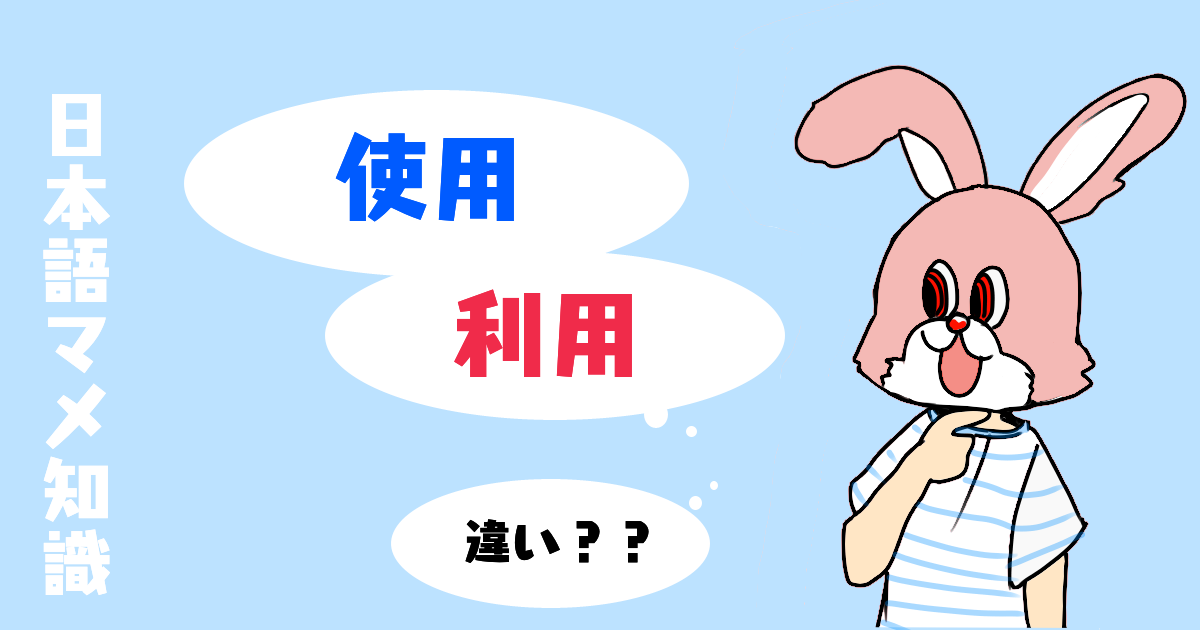
せ、先生、そういえば「使用」と「利用」は何が違うんですか?S-sensei, by the way, what’s the difference between “shiyō” and “riyō”?
いいところに気がつきましたね!ウサギ君の「使い方」は厳密にいうと間違いです。2つの意味で間違ってました。Good question! Strictly speaking, the way you used the word was incorrect. In fact, it was wrong in two ways.
ひぇ。Yikes.
「使用」と「利用」、どちらも使うことですが、違いは何でしょうか。「使用する」「利用する」のように、どちらも動詞にして使うこともできます。今回は、そんな使用と利用の違い、言い換え表現「活用」との使い分けを英語付きでわかりやすく解説。著作権や駐車場契約など法律用語としての違いも紹介します。Both “shiyō” and “riyō” mean “to use,” but what’s the difference? You can also turn them into verbs like “shiyō suru” and “riyō suru.” This time, I’ll clearly explain the difference between the two and how to distinguish them from “katsuyō,” along with English examples, plus the distinctions in legal contexts such as copyright and parking contracts.
使用・利用・活用の意味と英語言い換え
日本人も何気なく使い分けしていますが、「使用」と「利用」「活用」には、それぞれ明確な意味の違いがあります。まずは、それぞれの言葉の意味と英語、言い換え表現を見ていきましょう。Japanese speakers switch between “shiyō,” “riyō,” and “katsuyō” without thinking, but each has a clearly different meaning. Let’s look at the meaning, English equivalent, and common paraphrases for each.
「使用」の意味・英語・言い換え・例文
- ある目的のために物を役立てること。Using something for a specific purpose
- その物の機能を生かすとき使う。Using an object in a way that makes use of its function.
- 人が対象の場合、働かせる、なにかをさせること。When the target is a person, it means to make someone work or have them do something.
- 英語:use, employ
- 言い換え:利用、活用、運用、応用、用いる、採用、使う、駆使
「クーポンを使用する。」Use the coupon.
「この券は、使用期限が過ぎている。」This ticket is past its expiration date.
「スマートフォンは、今やみんなが使用するツールだ。」Smartphones are now tools everyone uses.
「利用」の意味・英語・言い換え・例文
- 既にあるものを役立てること。Making use of something that already exists.
- その物の機能を生かすとき、本来の使い方以外で使うとき。Using something for its function or for a purpose other than its original one.
- 人が対象の場合、利益のために動かすこと。When the target is a person, it means using someone for your own benefit.
- 英語:use, utilize
- 言い換え:使用、活用、適用、運用、行使、消費、行使
「ご利用中の契約内容を変更します。」We will change the details of your current plan.
「マスク入れとしてご利用ください。」Please use this as a mask holder.
「彼の優しい心を利用するようなマネをするな。」Don’t try to take advantage of his kindness.
「活用」の意味・英語・言い換え・例文
- 便利に使うこと。Using something in a convenient way.
- 本来の目的の中でその能力・ポテンシャルを最大限に活かして使うこと。making the most of its abilities or potential within its intended purpose.
- 英語:practical, use, utility
- 言い換え:利用、使用、使役、変化、運用、応用、役立てる
「空き地を子どもの遊び場として活用する。」Use the vacant lot as a playground for children.
「このシステムは、最新技術を活用しています。」This system makes use of the latest technology.
動詞の「活用」のように、「変化(conjugation)」という意味で使われるのが特徴です。It is also used to mean “conjugation,” as in the verb form “katsuyō.”
使用・利用・活用の違いと使い分け
「使用」と「利用」「活用」の意味と言い換えを見てきました。それでは、それぞれの違いと使い分けはどのようなところにあるでしょうか。使用と利用の違い、使用と活用の違いを見ていきましょう。We’ve looked at the meanings and paraphrases of “shiyō,” “riyō,” and “katsuyō.” So how do we tell them apart? Here’s how to distinguish and use them correctly.
「使用」と「利用」の違いと使い分け
「使用」と「利用」の大きい違いは、本来の使い方かどうかです。「使用」は、その物の正しい使い道のとき使い、そうではないときには使えません。また、「利用」は、その人の「利益」にならない場合には使えません。The major difference is whether something is being used in its original, proper way. “Shiyō” is used when something is used according to its intended purpose, and not otherwise. “Riyō” cannot be used if it does not provide some benefit to the user.
「毎日、地下鉄を使用する。」「毎日、地下鉄を利用する。」
「ポイントを使用して旅行に行った。」「ポイントを利用して旅行に行った。」
「宿題のプリントを鍋のフタに使用した。」×
「輪ゴムをヘアゴムとして使用した。」×
「宿題のプリントを鍋のフタに使用した」は、宿題以外の機能で使っているので間違いです。正しくは、「フタに利用した」です。Saying ‘I used my homework sheet as a pot lid’ is incorrect because it wasn’t used for its original purpose. The correct phrasing is ‘I made use of it as a substitute lid.’
「借金の額を利用して…」→×意味が通らない
また、「利用」は、特に人に使う場合、ネガティブな印象があります。Also, when “riyō” is used for people, it often carries a negative nuance.
使用したなら「雇った」という意味ですが、利用したなら「何か自分の利益のために」という印象になります。とはいえ、使用も人に使ってあまり良い印象はありません。日常会話では、「使用」も「利用」も人に使わないほうが良いでしょう。If you say “used,” it implies he hired them. But if you say “took advantage of,” it suggests he exploited them for his own benefit. That said, even “used” doesn’t sound very nice when referring to people. In everyday conversation, it’s better to avoid using either “shiyō” or “riyō” for people.
「使用」と「利用」「活用」の違いと使い分け
それでは、「使用」と「利用」の言い換え表現である「活用」との違いは何でしょうか。例文を見ながら使い分けを見ていきましょう。So what’s the difference between “shiyō” and “riyō” compared with their paraphrase “katsuyō”? Let’s look at some examples to see how they’re used differently.
②「空き地を遊び場として利用する。」
③「空き地を遊び場として活用する。」
3つの違いはなんでしょうか。①は、空き地を使うということ。その中には、もともと空き地は遊び場に適しているという書き手の印象が存在します。②は、空き地は本来遊び場ではないけれど、という意味も入ります。③は、もともと空き地は遊び場としてのポテンシャルを持っていたというイメージです。①“Use the vacant lot as a playground.” → This simply means using the lot, with an implied sense that the lot is naturally suitable as a playground. ②“Make use of the vacant lot as a playground.” → This suggests the lot wasn’t originally meant to be a playground, but you’re using it that way anyway. ③“Utilize the vacant lot as a playground.” → This implies the lot had potential as a playground and you’re drawing out that potential.
うーん…微妙な違いですねぇ…。The differences are subtle.
はい。正直細かな違いを話している人が意識していることは少ないので、絶対ではありません。Yes, and in reality most people don’t consciously distinguish them.
駐車場は利用と使用どちらが正しい?
たまに「駐車場は使用ですか?利用ですか?」という質問をされます。答えはどちらでしょうか。
「駐車場を利用する。」→OK
答えは、どちらも正解です。本来、駐車場とは駐車目的でつくられたものであるため、「使用」が正しいです。が、駐車場に関しては、「自分の車かどうか」も使い分けがされることがあります。「使用」は自分の駐車場、利用は、コインパーキングや病院、スーパーなど、使う人が不特定多数の駐車場で使うことができます。
「ホテル地下は駐車場ですので、ご利用頂けます。」
著作権(法律)使用と利用の違い
「使用」と「利用」の違いは、「正しい使い道かどうか」で使い分けされます。しかし、「正しい使い道」をどこまで定義するかによっては、使い分けが難しい場合もあります。けれど、著作権法における「使用」と「利用」の違いはしっかり使い分けられます。著作権法の一部を例に見てみましょう。
著作物(誰かが作ったもの)の「使用」とは、本を読んだり、音楽を聴いたりということ。著作物の「利用」とは、これらを複製する、論文やメディアで使うこと。著作権の法律上では、「使用」と「利用」は明確に線引きされているんですね。
まとめ
- 「使用」と「利用」「活用」の違い
「使用」は、その物の本来の使い方のとき。また人を雇って働かせているとき使う。
「利用」は、その物の本来の使い方+本来の使い方以外でも使える。発言者の利益があるときに使える。
「活用」は、その物の本来の使い方でその能力・ポテンシャルを最大限に活かして便利に使う。
- 著作権法から見る違い
「使用」は、著作物を見たり、読んだり、聞いたりすること。
「利用」は、著作物を引用したり、他に配信したりすること。
前回記事:【原因】と【理由】の違いとは?
次回記事:【反省】【後悔】【自省】の違いとは?

コメント